Pages

Friday, October 15, 2021

A Barefoot Shoe?


I may be one of the fussiest shoppers in the world. For years, I've contented myself with hand-me-downs (Thanks, Sis!), kept things simple (jeans & a t-shirt), and avoided purchasing new pieces for my wardrobe unless absolutely essential, not necessarily because of budget considerations as much as because I love the comfort of things that are well broken in. I'll be the first to admit that it has always been a chore for anyone to drag me on shopping excursions to purchase new clothing, especially footwear. (Sorry, Mom!) I can't
tell you how many of my childhood back-to-school clothing trips were accompanied by tears because it was so hard for me to find things I loved (not to mention the fact that I have always had zero fashion sense). Which brings me to present day...not much has changed... except, thanks to Katy Bowman, I have begun to discover a whole new footwear world: the barefoot/minimalist shoe movement. Where have these folks been all of my life?!? 
After decades of kicking off my shoes every chance I got, I have finally discovered shoes that allow me to feel barefoot while shod. Wonder of wonders!


So, what makes these shoes so special? First off, the
soles are thin and flexible, allowing for natural movement of the foot (as opposed to stiff shoes which require the majority of movement to come from the ankle). Did you know that 25% of the bones in our entire body reside from the ankles down? Our feet our comprised of 26 bones and 33 joints allowing for the front and back halves of our feet to move separately from one another and our toes to move separately from our feet, as well as, one another! Conventional shoes function more like a cast, restricting movement, whereas barefoot shoes allow for an incredible amount of movement and sensory feedback. Upon initial consideration, it may seem silly to gush about feeling moss, sticks, and plush carpet under one's shod feet, but upon further reflection, one begins to realize that we were designed with an incredible number of nerves in our feet such that our brains would be able to absorb all of this sensory feedback and make course adjustments accordingly resulting in better balance and maneuvering across varied terrain. Katy Bowman refers to this as "vitamin texture", and I've learned to see it as a gift. One of the benefits of a thin flexible sole that I have noticed in particular is the fact that I am far less prone to twisting my ankle when traversing uneven ground. The only place for give when wearing conventional shoes, with their stiff, inflexible soles, is the ankle. However, thin, flexible soles allow for a wide variety of movement from the 26 bones and 33 joints of the foot, an amazing design that I've come to appreciate more fully. I've also noticed that thin, flexible soles result in my stepping more gently because I can feel the ground underneath my feet, as designed, which results in less impact to my joints.


Furthermore, barefoot shoes have an
upper that connects well to the foot, allowing the shoe to stay on well without any kind of toe gripping (which can lead to all kinds of foot pain and issues). We are talking about footwear that acts like a second skin, albeit a bit tougher in order to protect us from potential hazards awaiting us on the paths ahead.

Additionally, the
toe box should be anatomically correct; that is, they should allow our toes to spread out (splay) naturally, while also remaining level with the rest of the shoe. (Conventional shoes, especially athletic shoes, tend to have a toe spring that artificially forces the toes upward into an extended position.) The benefits conferred by this design are improved stability. (Though this may not be noticed initially if your feet have been crammed into the narrow toe boxes of conventional shoes because this mild foot binding results in deformed feet that lose the ability to splay naturally. Thankfully, I've been a bit of a shoe rebel my entire life, have kicked off my shoes at every possible opportunity, and have worn over-sized shoes to give me piggy toes more room to wiggle while shod. I no longer need to do this now that I've stumbled upon shoes that conform to my feet rather than making my feet conform to them. :)

Finally, barefoot shoes are
zero drop which means that the thickness of the sole is the same at the heel and the toe. Believe it or not,  while I list it last, this feature is the first thing that drew me to the barefoot shoe movement. You see, what I learned after I gave birth to Baby #9 is that a lifetime of poor movement habits had caught up with me and culminated in a condition that made postpartum recovery more of an uphill battle. I needed to make some changes...big and small. Perhaps the simplest one was to change what I was wearing on my feet. You see, nearly all conventional footwear (including the athletic shoes that I wore most frequently) have a positive heel which prevents the ankle from coming to a 90 degree angle while shod. This lack of vertical alignment throws off the alignment of the rest of the body causing changes to joint function and the way the body manages internal pressure. It's quite amazing but, sadly, beyond the scope of this post. (For more information, check out any of Katy Bowman's informative titles like Move Your DNA, Whole Body Barefoot, or Diastasis Recti.)

So, what shoes "fit the bill"? Katy Bowman maintains a helpful list to serve. However, I've also had the opportunity to work with some fantastic folks and will share my discoveries in future posts.


The best shoes let you enjoy all of the comforts of being barefoot while protecting your feet from any potential hazards that might present themselves on the paths ahead.

Tuesday, December 17, 2019

Who is the Greatest?: A Book Review


If you're still thinking about a gift for a preschooler in your life, you might consider introducing him or her to Charles Haddon Spurgeon by means of Who is the Greatest?. The latest title in the Little Lights series written by Catherine Mackenzie and published by Christian Focus 4 Kids, these books are miniature biographies carefully designed for those with limited attention spans. Each durable page set features a short paragraph of text and colorful illustrations. Mackenzie is honest about Spurgeon's life struggles and lessons learned and encourages kids to turn to Jesus for comfort and help, just as Spurgeon did. Best of all, Who is the Greatest? clearly communicates the most important message that Spurgeon learned and proclaimed, the good news that Jesus came to save sinners. I'm happy to commend it to you!

*Many thanks to CF4K for sending me a complimentary copy of Who is the Greatest?! This is my honest opinion.

Tuesday, December 10, 2019

Safe and Sound: A Book Review

Safe and Sound: Standing Firm in Spiritual Battles
"For we do not wrestle against flesh and blood, but against the rulers, against the authorities, against the cosmic powers over this present darkness, against the spiritual forces of evil in the heavenly places" (Eph. 6:12, ESV).

What is this spiritual battle that all face yet cannot see? How does one fight an unseen enemy? How do we think biblically about spiritual warfare?

David Powlison wrote Safe and Sound because he wanted "...us to be awake and alert to the real battles we face" (pg. 1). In Part 1, he carefully examines Scripture to answer questions regarding the nature of spiritual warfare, the role that the Evil One plays in this world, and how we are to stand against him. Powlison faithfully unpacks Ephesians 6:10-20 by examining the Old Testament Messianic passages in Isaiah and Psalms to which Paul alludes (as opposed to the more common, but erroneous, teaching that Paul has the Roman centurion in mind). In so doing, Powlison helps us "...learn how to fight well, how to put on Jesus Christ himself, wearing the weapons of light with which he defeats the power of darkness" (7). In Part 2, he helpfully illustrates what spiritual warfare looks like and applies the wisdom of Scripture to these scenarios. This section, in particular, makes this book unique with its emphasis on and application to personal ministry to other believers. In addition to tackling difficult topics like the occult and animism, Powlison addresses battles with anger, fear, escapism, and death.

Coming in at around 100 pages, Safe and Sound is incredibly concise, making it easily accessible to those who are short on time and looking for a biblically faithful primer on the subject of the unseen spiritual warfare in which we all engage daily. I'm happy to commend it.

*Many thanks to New Growth Press for sending me a copy of Safe and Sound! This is my honest opinion.

Thursday, September 5, 2019

Beyond Authority & Submission: A Book Review

Abuse of authority is an abomination to God. Misusing and/or going beyond Scripture sets us up for just such abuses. That's why I'm so grateful for women like Rachel Green Miller who are being like the noble Bereans, examining the Scriptures to see if what religious teachers are teaching is in accord with the whole counsel of God's Word, which is exactly what she sets out to accomplish in her newly released book, Beyond Authority and Submission.

Miller begins her work by examining the source and nature of authority and submission according to Scripture. To be clear, she isn't seeking to find a loophole that allows women to disobey the clear teaching of Scripture. However, she does make some very helpful observations of where the plain teaching of Scripture has been misapplied and misused. Miller carefully demonstrates that authority and submission are important but limited aspects of relationships and widens her lens to include the biblical themes of unity, interdependence, and service. After laying this foundation, she moves to examine cultural influences throughout history that have been imposed upon our definitions of "biblical" womanhood with particular emphasis on Greco-Roman society and the Victorian Era. She examines the first-wave feminist movement, its subsequent developments, and the conservative Christian response to these movements followed by an examination of what the Bible has to say about the nature of men and women. Miller closes with sections devoted to prevalent teaching on women and men in three different spheres: marriage, the church, and society, and closely compares what is being taught with what we encounter in Scripture.

Beyond Authority and Submission is a much needed start to a conversation that has needed to happen. Again and again, Miller illustrates areas where conservative religious leaders have gone beyond Scripture, imposing cultural definitions of manhood and womanhood upon folks while claiming they are biblical standards. Her careful attention to the whole counsel of God's Word reveals where mistakes have been made and where we need to bring our views into closer alignment with Scripture, representing "the full diversity of expression that is seen in Scripture" (pg. 125). Some errors have already been discussed at length on blogs (ex. The Trinitarian error of eternal subordination of the Son). Others have been less discussed. For example, Miller writes of the damage caused by mistranslation and misinterpretation of Scripture that leads men to be suspicious of women:
"When conservative Christians teach men to suspect women's counsel because women are prone to deception and will try to usurp their leadership, interactions become antagonistic. If women can't be trusted to make wise decisions, and if men have to be careful not to let women lead them, then men and women are pitted against each other. These teachings undermine the unity, interdependence, service, and co-laboring that should define Christian behavior." (pg. 119).
 Again, Miller doesn’t' go beyond Scripture in allowing women to lead men where the Bible clearly forbids it (ex. Women as elders), but she is careful to warn against going beyond what is clearly stated in Scripture. She highlights many examples of women who lead, initiate, protect, and provide in Scripture. She examines many instances in which biblical women exercise theological discernment. Miller is careful not to flatten out the distinctions between men and women but does highlight the many instances when we have conformed "to narrow or wooden definitions of masculinity and femininity" (pg. 148). For example, we rightly recognize that "...godly women should be submissive, gentle, quiet, and responsive...helpers and life-givers...", but we err when we limit these attributes strictly to women as many times in Scripture, godly men are to exhibit these characteristics as well. As a lover of theology and a bit of a "tom boy", it was so refreshing to read a more broad view of femininity and masculinity....one that doesn't pigeon-hole men and women into traditional cultural constructs OR compromise biblical truth.

Miller doesn't throw out the baby with the bath water and is careful to recognize that much of what conservative Christian leaders are teaching is good, but she does bring much needed balance to a movement that has made a severe overcorrection. Perhaps the greatest concern that Miller and others are highlighting is the damage these overcorrections do to the Gospel and the Church. She writes:
"When marriage is emphasized as living out a picture of the gospel as the highest calling for women, along with bearing children, it tends toward making marriage and family into idols. This is especially harmful for singles and widows and for those who don't fit the neat box of a nuclear family unit...Marriage, while a good and necessary thing, isn't the gospel. Conflating the two obscures the actual gospel and presents a truncated understanding of what Christ actually accomplished for believers through His death and resurrection" (pg. 165).
Additionally, Miller addresses unbiblical teaching on the purpose of marriage, divorce and remarriage, the subtle prioritization of men over women in the church, abuses perpetuated by abusive teaching that treats women like children, and many traditions that have crept into some teaching that is far more cultural than biblical.


Beyond Authority and Submission challenged some of my presuppositions and caused me to think more carefully about some of my positions. Many folks in conservative Christian circles will benefit from a thoughtful read of this book but particularly those in conservative circles who have been influenced by (or whose teachers/leaders have been influenced by) works on biblical womanhood/manhood such as those by John Piper & Wayne Grudem (as well as other contributors to Recovering Biblical Manhood and Womanhood), The Council on Biblical Manhood and Womanhood, Nancy Leigh DeMoss, Mary Kassian, Elisabeth Elliot, Voddie Baucham Jr., Anna and Elizabeth Botkin, Douglas Wilson, Debi Pearl, Gary Thomas, etc. If you think all feminism has always been evil or pine for the good old days, Beyond Authority and Submission will serve to bring a much greater balance to your perspective. Rachel Green Miller raises important questions with careful attention to and handling of God's Word. May we all handle Scripture as faithfully as Miller as we continue this valuable conversation!

*Many thanks to P & R Publishing for supplying me with an advance copy of Beyond Authority and Submission! These are my honest thoughts.

Tuesday, August 27, 2019

Don't Blame the Mud: A Book Review


Don't Blame the Mud: Only Jesus Makes Us Clean
Our family has been incredibly blessed by a number of resources written by Marty Machowski, most notably, his Old and New Testament devotionals for families so, I was excited to read his latest work for children, "Don't Blame the Mud". The Gospel message communicated through the parents was crystal clear and the follow-up questions provided in the parent section were helpful for drawing the kids out to think about ways that they struggle to obey, seek to blame-shift, etc. We honestly didn't love the story and read it repeatedly. Perhaps some of your kids will receive the story better. The Gospel message and follow-up questions certainly make it worth giving a shot. :)

*Many thanks to New Growth Press for sending me a complimentary copy of "Don't Blame the Mud"! This is my honest opinion!

Wednesday, June 26, 2019

The Power of Christian Contentment: A Book Review

The Power of Christian Contentment: Finding Deeper, Richer Christ-Centered Joy
Having stumbled across Andrew Davis earlier this year, I was excited when the opportunity arose to review his latest book, The Power of Christian Contentment. Based on Jeremiah Burrough's excellent work, The Rare Jewel of Christian Contentment, Davis seeks to make that work more accessible to  a new generation, explaining dated words, unpacking complex sentences, and adding many new illustrations and content. Amidst the new content is a chapter on contentment in prosperity which is particularly relevant for many in the Western world. The Power of Christian Contentment is Scripture saturated, Christ-centered, and an edifying read that is sure to bless a new generation of readers.


Many thanks to Baker Books and the Baker Books Bloggers program for sending me a complimentary copy of The Power of Christian Contentment! The opinions I have expressed are my own, and I was not required to write a positive review. I am disclosing this in accordance with the Federal Trade Commission’s 16 CFR, Part 255.

Monday, April 15, 2019

Assured: A Book Review

Am I truly saved?

Assured: Discover Grace, Let Go of Guilt, and Rest in Your SalvationWhen I was a child, I prayed "the sinner's prayer" many times wondering if it had really "worked". Truth be told, "Am I saved?" is a good question to ask. After all, Paul encourages his readers to:

"Examine yourselves, to see whether you are in the faith. Test yourselves. Or do you not realize this about yourselves, that Jesus Christ is in you?--unless indeed you fail to meet the test!" (2 Corinthians 13:5, ESV)

The author of Hebrews also warns his readers about falling away from the faith. It was this author who put the fear of God into me a little more than a decade ago as our pastors preached through that book. I was sure that I currently believed that Jesus Christ died for my sins and that I wanted to follow him, but I wondered how I could be sure that I would continue to believe. How could I be sure I would never fall away like some of my other friends had over the years? The thought still brings tears to my eyes, but I have far greater assurance these days than I did when these questions first plagued me. Thankfully, my pastors wisely worked through my questions alongside me, directing me to the Word of God where I would find a rock solid foundation for my faith and for assurance of my salvation, but what about those who don't have this luxury?

Greg Gilbert's book, Assured: Discover Grace, Let Go of Guilt, and Rest in Your Salvation, addresses some of the same questions that troubled me years ago and then some. Again and again, Gilbert demonstrates how the Gospel of Jesus Christ and the promises of God provide a firm foundation for Christian assurance, "fountainheads from which our sense of certainty of our salvation erupts" (20). Gilbert faithfully unpacks Scripture passages that reveal the role of good works with regard to assurance (including ways we might misuse this tool) and speaks of the witness of the Holy Spirit as the seal of a believer's salvation. Further, Gilbert discusses ways to strengthen assurance or regain it if it's been lost (19).

Truth be told, much of this ground has been covered in previously published titles, but Gilbert also includes a helpful chapter on lies we tend to believe that undermine assurance and another especially encouraging chapter on besetting sins which make this title a unique and valuable contribution to the discussion. Gilbert's writing is accessible, edifying, and utilizes memorable illustrations. I'm happy to commend it to any who find themselves wrestling with this subject or seeking to minister to others who are.

*Many thanks to Baker Books for sending me a complimentary copy of Assured! These are my honest thoughts. I'm praying Assured brings fresh warning and conviction where needed and lead to the peace the surpasses all understanding for those who are trusting in the finished work of Jesus Christ for their salvation!

Tuesday, April 9, 2019

None Greater: A Book Review

None Greater: The Undomesticated Attributes of God
"God is someone than whom none greater can be conceived...What must be true of God if he is the most perfect being?" (10) This is the central question explored by Matthew Barrett in his recent book, None Greater: The Undomesticated Attributes of God.

Throughout church history, men like Aquinas, Anselm, Augustine, John Calvin, Stephen Charnock, Herman Bavinck, as well as others, have written rich, Scripture saturated volumes on the character of God. Barrett has done the Church a great service by bringing his readers to this stream and bidding us drink from this classic teaching concerning God, making it all the more accessible to our generation. Far from being abstract, intellectual theology fit primarily for academia, this book is richly devotional and leads its readers to worship. Granted, there are times when such a grand topic exercises the mind a good deal, but Barrett has written with the lay person in mind, and those who climb to the summit with him will be rewarded with breathtaking views of our glorious God. I am pleased to give None Greater my highest commendation!

"...if we think about God, we should say to ourselves: 'This is not God; God is more than this: if I could conceive him, he were not God; for God is incomprehensibly above whatever I can say, whatsoever I can think and conceive of him' " (Stephen Charnock as quoted by Matthew Barrett, 40).

*Many thanks to Baker Books for providing me with a complimentary copy of None Greater! These are my honest thoughts.

Friday, February 1, 2019

Broken Pieces - A Book Review

Broken Pieces and the God Who Mends Them
When we walk through the valleys and storms of life, where can we find an anchor for our souls? What is our true comfort? How can we care for others who are suffering? In Broken Pieces and the God Who Mends Them, Simonetta Carr shares her painful journey through the unknown waters of schizophrenia and offers support and encouragement for others who are going through similar trials. Again and again, she turns her eyes and directs ours to: "...the triune God--not only as a helper and comforter of sorrows, but in all his greatness and the perfection of his attributes" (pg. 106) demonstrating that God's unchanging character (Ex. 34:6-7) is the anchor for our souls in any and every aspect of life. She writes:

"Ultimately, Christ is my only true comfort and my only anchor in this sea of uncertainty" (155).

The struggle of faith is to see God the Father rightly and then act in light of what we know to be true, rightly imaging Him. This "Faith is not defined by our feelings. What we feel doesn't change what's objective" (190). One of Simonetta's pastors, Michael Horton, encouraged her with the words of John Calvin:
"All things around us are in opposition to the promises of God: He promises immortality; we are  surrounded with mortality and corruption: He declares that he counts us just; we are covered with  sins: He testifies that he is propitious and kind to us; outward judgments threaten his wrath. What then is to be done? We must with closed eyes pass by ourselves and all things connected with us, that nothing may hinder or prevent us from believing that God is true" (191).
In response, Simonetta writes: "And so I continue, day after day, to divert my mind from all the many things that pull me away from God’s promises" (191).

Simonetta Carr
And this is exactly what Simonetta seeks to do for her readers as well. While Broken Pieces shares the Carr family story, ultimately, this book isn't centered on Simonetta and her family but on the good God who faithfully carries all believers through life's trials and the promises of the gospel that sustain us in these struggles. She shows us what it looks like for one mom to "...run 'to the rock that is higher than' us (Ps. 61:2) and point our loved ones in that direction" (213). Simonetta is honest and transparent about the wrestlings of her heart and illustrates how one family's relentless love of a sufferer speaks of Christ's relentless love for us when we were in no condition to love him back (83).


Broken Pieces is full of wisdom and offers lots of practical advice to support caregivers including resource recommendations. It seeks to fuel compassion and empathy, allowing us to enter someone's pain, feel deeply, and weep with those who weep. Simonetta teaches us the importance of guarding our speech and judgments as Christians and how to be a friend to sufferers. She also highlights the primacy of the gospel and the ministry of the Word in the life of the church revealing the intricate inter-relationship between what we believe about God and how we live and walk through trials. I'm very grateful that Simonetta and others have reopened their tender wounds to build up the Body of Christ and help all of us image God more closely as we care for sufferers!
"It’s only when we realize who God is in Christ that we can not only accept his sovereignty over all but welcome it with joy and relief. And this realization comes when we understand the Bible as the unified story of a loving God who is redeeming a rebellious human race. God is not just an abstract sum of his attributes. He’s a God who acts in history, and his acts constitute an integral part of his revelation of himself as an omnipotent, omniscient, all-just, all-loving, all-good, and all-wise God. No one will ever know our loved ones like he does, and no one will ever love them more than Christ, who has died on the cross for them" (272).
*Many thanks to P & R  Publishing for a complimentary digital copy of Broken Pieces! These are my honest thoughts.

Thursday, January 31, 2019

Real Change - A Resource Review

Real Change
Do you ever feel like you're spinning your wheels, not making much progress in areas where you'd like to see change in your life? Often, change is difficult and slow going. It can be easy to get discouraged and abandon the effort. Real Change: Becoming More Like Jesus in Everyday Life seeks to come alongside believers as they pursue a personal change project, encouraging; instructing; and pointing people to Jesus.

Image result for dynamics of biblical change ccef
Created by CCEF. www.ccef.org. Available in Real Change.
Based on the diagram from "The Dynamics of Biblical Change" course offered by the Christian Counseling and Education Foundation, Real Change unpacks "The Three Trees Diagram" in six concise lessons, offering questions for reflection, study, and discussion, as well as, an included Leader's Guide. Users will find this guide Scripture-saturated consistent with the authors' stated goal:

"This model is not intended to supersede Scripture but to summarize Scripture. Please use the model in such a way that it encourages people to run toward the Bible rather than seeing it as a stand-alone model" (53).
For those who are familiar with the CCEF materials from which this derives it's inspiration, Real Change isn't merely a re-hashing of previously published material but takes more of a small group, Bible study approach as opposed to the lecture format of previous material. It's a welcome addition to the Three Trees "family" of resources and should prove edifying as those who utilize it examine their hearts and look to Christ, the Author of all real change.

*Many thanks to New Growth Press for providing me with a complimentary copy of this book! These are my honest thoughts.

Wednesday, January 2, 2019

Idols of a Mother's Heart - A Book Review


Idols of a Mother’s Heart
"It had been one of those 'terrible, horrible, no good, very bad days.' The kind where nothing went the way it should. I must have corrected the kids every five minutes. I refereed fights, cleaned up mess after mess, repeated instructions, and tried to create order out of chaos. I was exhausted, irritated, and impatient.
Sitting at the dinner table that evening, it was my oldest son's turn to give thanks. When I heard him say, 'And God, could you please help mommy to be patient with us?' I realized I wasn't the only one affected by our difficult day. I was part of the problem" (24). 
"Before I had children, I considered myself a patient person." Who can't relate to that? Motherhood is hard. Seeing our sinfulness exposed is harder. Applying the good news about Christ's life, death, and resurrection to our lives is glorious! Christina is a wise and relate-able companion for the journey.

In Idols of a Mother's Heart, Christina Fox begins by laying a strong, Gospel foundation which remains central throughout the book. She writes about how we were created to glorify, enjoy, worship, and image God and about how things went terribly wrong. She follows Tim Keller in defining an idol as:
"...anything more important to you than God, anything that absorbs your heart and imagination more than God, anything you seek to give you what only God can give. A counterfeit god is anything so central and essential to your life that, should you lose it, your life would hardly feel worth living. An idol has such a controlling position in your heart that you can spend most of your passion and energy, your emotional and financial resources, on it without a second thought" (Tim Keller as quoted by Christina Fox, pg. 56).
Christina then moves to help her readers identify and dethrone idols. To this end, she offers heart-probing diagnostic questions and reminds us that idols fail again and again and again to deliver on the promise of ultimate happiness, pointing us to Christ who is all-satisfying.
"As much as we seek happiness in the idols we pursue, they can never give us the joy we find with Christ...the infinite abyss can only be filled by an infinite and immutable object, that is to say, only by God Himself" (78).
While I am aware of several other books on this subject, many of them cater to a male audience and/or perspective and focus on idols like sex, money, and power. Christina has thoughtfully applied the same truths found in those excellent books to the area of motherhood, specifically addressing the common idols of: children, achievement and success, comfort, control, and approval. Idols of a Mother's Heart is a welcome addition to other works on this subject!

Idols of a Mother's Heart a Scripture saturated book that is full of sound doctrine. Each chapter closes with rich prayers, insightful questions, and Scriptures for further study and reflection. I love that Christina is humble, real, and transparent with her readers. Idols of a Mother's Heart is a useful book to encourage us daily so that we might not be hardened by the deceitfulness of sin. It is my joy to commend it to you!

**Many thanks to Christian Fox for sending me a complimentary copy of this book!! These are my honest thoughts!

Wednesday, December 5, 2018

Amazing Grace - A Book Review


Amazing Grace recounts the story of John Newton and one of his most beloved hymns in an engaging way for children ages three to six. It has a large font with just the right amount of text per page to match the (generally short) attention spans of this age group. Additionally, the authors seek to retain the listener's attention by asking simple questions along the way. Although simple enough for this age group, these questions are not simplistic and have the potential to lead to helpful discussions about family, discipleship, companions, rebellion, fear, prayer, God's forgiveness, and grace. Additionally, these questions may serve to draw listener's into Newton's story and make him more relate-able. Best of all, each of these components leads the child on a journey to see themselves, like Newton, as a sinner in need of God's forgiveness freely offered through Jesus Christ. Amazing Grace paves the way afresh for the Good News of Christ's life, death, and resurrection.

One note: Like many Christian resources, this book seems to summarize Gospel. It's closing pages say:
"Do you know what 'grace' means? It means God gives us what we don't deserve. Because we sin, we deserve God's punishment. But when we believe in Jesus and ask for forgiveness, God forgives and saves us..." (39).

While it is essential to believe in Jesus, the question may remain, "What are we to believe about Jesus?" Unfortunately, due to brevity, this didn't seem as clear as it could be in this book. I would encourage everyone reading this book to go one step further with their kids and read First Corinthians 15:3-4:
"For I delivered to you as of first importance what I also received, that Christ died for our sins according to the Scriptures, and that He was buried, and that He was raised on the third day according to the Scriptures..."

This will help present the Gospel more clearly to one's listener(s). The book closes with three suggested questions for discussion, and a fourth would complement these well: "Why can God give sinners grace?" (The First Corinthians passage above answers this question well: Because Christ died for the sins of all who would believe, and God accepted His sacrifice.)

As soon as we finished Amazing Grace, my kids asked me if we had the next book in the series. We thoroughly enjoyed this title, and I am happy to commend this title to you, my readers.

If you're in Canada, you can purchase this book through Reformed Book Services.

*Many thanks to Biblical Spirituality Press and Reformation Heritage Books for sending me a complimentary copy of this book!! This is my honest opinion.

Monday, December 3, 2018

God Counts - A Book Review

PUBLISHER's DESCRIPTION

In this engaging, illustrated children’s book by Irene Sun, young readers learn how numbers declare the glory of God, discovering Bible stories and the truth, beauty, and goodness of our sovereign God through numbers and patterns. With countable illustrations and an easy-to-learn structure, children who are always seeking, finding, tracing, and counting numbers will be captivated by God Counts.


Through simple language kids will understand, God Counts shares theological truths and helps children become familiar with Scripture, exploring the patterns of creation, numbers in the plan of redemption, and the intimacy of a personal relationship with God. This children’s book explores how God counts every fish in the sea, every star in the sky, every hair on their heads, and every tear in their eyes.

By discovering numbers in God’s world and in his Word, parents help their children foster a deeper love and knowledge of who God is and how he counts them as his. Families will be enriched as they learn together how numbers magnify God—just as a telescope magnifies the stars—and each numbered lesson points to a larger redemptive story of Scripture. On each page, the illustrations engage readers, displaying not only a picture but a mosaic of patterns. 

This playful children’s book serves as a beginner’s theology book for young readers who love numbers and patterns, introducing the Trinity, the God of order, the holiness of God, the problem of sin, the rescue and love of Jesus, and much more. Children who love to count will be filled with wonder, leading them to understand deeper truths about God, themselves, and the world around them.
\
MY IMPRESSION

God Counts is colorful and contains much biblical truth. It's fun to count various objects with littles throughout the pages of this book. I appreciate that it included Scripture references. At times, the organization seemed a little random and scattered to me. It goes from:

God
to humans as image bearers
to the Trinity, cross, & resurrection (without mentioning sin)
to the beauty of creation
to new creation
to God speaking
to sins that God hates
to God's presence with us (like Joshua)
to the rescue of his children (like Noah)
to imaging God through the Holy Spirit
to God seeking his lost children
to forgiveness (of the disciples)
to eternity
to infinity.

One concern that I have about this book is that God Counts seems to assume that preschoolers are saved and heaven bound which could lead to a false assurance of faith if parents aren't careful to balance out what is presented here. God Counts lacks any call to repentance and faith. That being said, Number 11 does lend itself well to this discussion when it mentions that Judas did not return to Jesus for forgiveness, but the other eleven disciples did return and were forgiven. The final number reads:

"Twelve tells us we will live with God forever"

and the book concludes with:

"God counts all of your steps
Until you walk with him side by side.

God counts all of your days
Until you see him face to face..."

While there is much to commend in this book, in light of these particular issues, I would only recommend this to those who are grounded well enough in Scripture to balance out what they read with their listeners.

*Many thanks to New Growth Press for sending me a complimentary copy of this book! This is my honest opinion.

Wednesday, November 28, 2018

A Fever, a Flight, and a Fight for the World - A Book Review

A Fever, a Flight, and a Fight for the World: The Rwendigo Tales Book FourWhat is it like to grow up in Africa? That's what J.A. Myhre sought to depict for her children through her Rwendigo Tales. Originally written as Christmas presents, but now, a gift shared with a wider audience, Myhre shows rather than tells her readers what it is like to grow up in Africa. Her experience as a doctor who has served with Serge in East Africa for over two decades uniquely qualifies her to present the distinct challenges of those living in the African jungles. A Fever, a Flight, and A Fight for the World is the fourth book in her series, aimed at youth, which takes us on a journey with "A doctor volunteering in a village plagued by a mysterious virus...and a young girl...the only other survivor..." who find themselves on a deserted island. Each chapter leaves you wanting to read the next.

Like the previous title in this series, I thoroughly enjoyed A Fever, a Flight, and A Fight for the World over an afternoon and evening. Although it doesn't expressly tell how the Gospel makes a difference in the character's lives or how the Gospel gives hope to those facing sin and suffering, it lends itself well to that discussion. Myhre's writing continues to be engaging, wholesome, and age-appropriate while avoiding over-simplicity in vocabulary, plot, and conflict and is a thought-provoking introduction to life in Africa.


Book Synopsis from the Publisher:


A Fever, a Flight, and a Fight for the World is a compelling African adventure story that will enthrall eight- to fourteen-year-old youth who love adventure and learning about faraway places. In the exciting fourth and final book in the Rwendigo Tales Series, readers will be inspired by ordinary people who make the extraordinary choice to stand against great evil. Written by J. A. Myhre, a doctor living and working in East Africa, this adventure story teaches readers of all ages important truths about justice, overcoming evil, and the courage to make a difference.

In A Fever, a Flight, and a Fight for the World, A doctor volunteering in a village plagued by a mysterious virus wakes up on a deserted island injured, sick, and near death—with no memory of how he got there. As Dr. Mujuni slowly regains his memory, he pieces together the horrific reality of what happened to the community and learns just how far the government-backed officials will go to silence all knowledge of the epidemic. As a young girl named Nyakato, the only other survivor, nurses him back to health, Dr. Mujuni must devise a plan to make their way back to the mainland, but what they discover on their journey is even more dangerous than they could ever imagine.

Through a series of perils and hazards, Mujuni and Nyakato must fight for more than their own lives, learning the true cost of overcoming evil and greed. Through their adventures, readers will find hope in the midst of great loss, triumph and courage in the midst of death and injustice, and love in the midst of darkness.

*Many thanks to New Growth Press for sending me a complimentary copy of this book! This is my honest opinion.

Wednesday, November 14, 2018

God Made Me and You - A Book Review

God Made Me and You: Celebrating God's Design for Ethnic Diversity
PUBLISHER'S DESCRIPTION

This beautifully illustrated children’s book invites kids to explore God’s design for ethnic diversity and challenges readers—both parents and children—to learn and live out counter-cultural, biblical views, fostering a lifelong celebration of diversity for the glory of God. Designed for four- to eleven-year-olds, God Made Me and You by Shai Linne is the second book in the God Made Me series, starting with God Made All of Me by Justin and Lindsey Holcomb.

MY THOUGHTS

My preschoolers and I enjoyed God Made Me and You. The combination of colorful illustrations and lyrical rhyme make this book a lot of fun. Shai Linne communicates that His readers are image bearers who exist for God's glory, love, praise, etc. God Made Me and You primarily focuses on externals (tall/short, hair/eye color, disabilities, etc.) and would serve as a good starting point for further conversation(s) highlighting what it means to be made in the image of God. Most of all, I appreciate that this book follows the redemptive story line (creation, fall, redemption, consummation) and has a clear Gospel message. God Made Me and You is a useful picture book to help preschoolers appreciate the diversity of God's design in creation.

*Many thanks to New Growth Press for sending me a complimentary copy of this book! This is my honest opinion.

Tuesday, November 13, 2018

All That's Good - Book Review


Hannah Anderson (3 Book Steal)
"How can we, imperfect as we are, develop an instinct for recognizing and embracing the good? How does discernment equip us to navigate a broken, complicated world with confidence and joy?" (13) These are the central questions that Hannah Anderson attempts to answer in her latest book, All That's Good. Her goal is not simply to tell her readers what to think but to shape how they think, and she desires to "lead you away from our common disposition to fear-based thinking toward a place of hope and abundance" (14).


Skillfully weaving stories and teaching together, Hannah Anderson's writing is a delight to relish! Rather than focusing on the evil from which we ought to abstain, Anderson directs us to focus our gaze on what is true, honorable, just, pure, lovely, and commendable as defined by Scripture, not as an end in itself but as a means to a greater end, namely, seeing and savoring Jesus Christ.These chapters are not intended to be exhaustive but contain thought-provoking insights which challenge the reader to think deeply about these adjectives.

Perhaps the section that ministered to me the most in this season of life was the last chapter in which Hannah was honest and transparent about how the gift of discernment is "dangerous" (see The Gospel Coalition article by this title for further explanation of this) and can lead the one who has it to feel incredibly lonely at times. She notes that, sometimes, the gift of discernment can feel more like a burden than a gift. Hannah Anderson writes:

Hannah Anderson
"If your experience is anything like mine, you will quite possibly feel alone in this. Instead of relishing being the 'prophetic' voice, you'll agonize over it. If you truly have the gift of discernment, you'll also know the weight of what you are about to say. But because you see good and evil more clearly, you'll also see more clearly what's at risk, and like Jeremiah, even if you try to keep quiet, you'll find the weight of God's message stronger still...(209).
I know there have been times when I have sinned by silence and other times I have spoken in arrogance. I also know there are times when I have frustrated people by simply being a dissenting voice. I know some would prefer I be the proverbial meek and quiet female tasked with maintaining social norms. And if I'm honest, I'd prefer that too. As I've confessed to Nathan [hubby] on more than one occasion, 'I'd be anyone else if I could.' But at the end of the day, none of us can tell God that He has made a mistake in forming and gifting us the way He has" (pg. 182).

She goes on to write about the natural longing for communion and belonging that we have but how brokenness creeps in, even in the life of the church. But she doesn't leave her readers in that hopeless state but shows how Christ also suffered and how coming to the Lord's Table forces us "...to reckon with the fact that nothing else is good enough to draw us together. In coming together, we defy the brokenness and proclaim a greater, shared good" (pg. 184).

All That's Good is not a "x"-steps-to-decision-making book. At times, the content will likely complicate your decision making process(es), but it will make you think about how you can glorify God as you seek to embrace the good of His creation. Like Hannah Anderson's previous books, Made for More and Humble Roots, All That's Good offers much food for thought and is a joy to read.

Many thanks to Moody Publishers and Hannah Anderson for providing me with a complimentary copy of All That's Good. These are my honest thoughts!


Thursday, November 8, 2018

Book Review: Good News for Little Hearts


I remember the first time the fine pastors at Living Faith Church introduced me to the world of biblical counseling. I was hooked! I longed for someone to make these ideas more accessible to a wider audience, especially my children. I've never been particularly good at writing fiction, but I knew that there was a gem of an idea there. Finally, a like minded sister has watered that idea seed and allowed it to grow and blossom.

At present, there are three volumes in the "Good News for  Little Hearts" series which seeks to help kids and parents face anxiety, failure, and anger in a God-honoring way. While these animal stories don't quite have the enduring charm of classics such as the Beatrix Potter books, Little Bear, or Frog and Toad and some conversations between characters seemed to come off a little unnatural (and maybe even a little "preachy") at times, my little ones enjoyed them nonetheless. The volumes are sturdy and full of creative, vibrantly colored illustrations. Each book concludes with Tips for further helping your child and four "Back Pocket Bible Verses" in the New Living Translation that you can cut out and give to your child.

Zoe's Hiding Place: When You Are Anxious begins in a mouse house and contains some of my favorite illustrations. The mouse house contains all kinds of treasures lending itself well to an "I Spy" game. Unfortunately, content-wise, it was my least favorite. It reminded me of the type of moralistic Christian books with which I grew up. While Jesus was mentioned by name, the Gospel wasn't clearly proclaimed. This book makes it seem as if God is with everyone for good all of the time and doesn't make any distinction between those who are His people and those who are not. However, that being said, the book does lend itself well to a Gospel presentation. You'll just want to continue the story by explaining to your kids that the reason why a holy God never leaves or forsakes His children in spite of their sin is because Jesus was forsaken in place of all who would believe and bore the penalty for their sins when He died on the cross and that Jesus didn't remain forsaken but was raised from the dead on the third day and is now seated at the right hand of the throne of God the Father making intercession for us and that He sends the Holy Spirit to dwell within all who trust in Him. All in all, Zoe's Hiding Place is an okay title but not my favorite of the bundle.

Buster's Ears Trip Him Up: When You Fail has the clearest Gospel message of the three books, and both it and Jax's Tail Twitches: When You Are Angry mention the need for Jesus' forgiveness. I love that these books clearly point our kids to Christ! As far as articulating biblical counseling material, Jax's Tail Twitches seems to have the most content as it models the proper way to handle conflict: going to God in prayer, taking the log out of one's own eye first, asking forgiveness, and being reconciled. Parents will want to make sure to avail themselves of the parent tips at the end for the clearest Gospel presentation in this work. Buster's Ears Trip Him Up came in close but, in addition to confessing sin to God, parents will likely want to  follow the example and parent tips in Jax's Tail Twitches and encourage kids to apologize and reconcile with those who have been hurt by their prideful boasting.

All in all, these titles are useful picture books that will serve adults as they seek to minister to children in their lives and help them to better image and glorify their Creator and Savior, Jesus Christ.

Many thanks to New Growth Press for sending me complimentary copies! I was not obligated to write a positive review. These words are my honest opinion!

Saturday, October 27, 2018

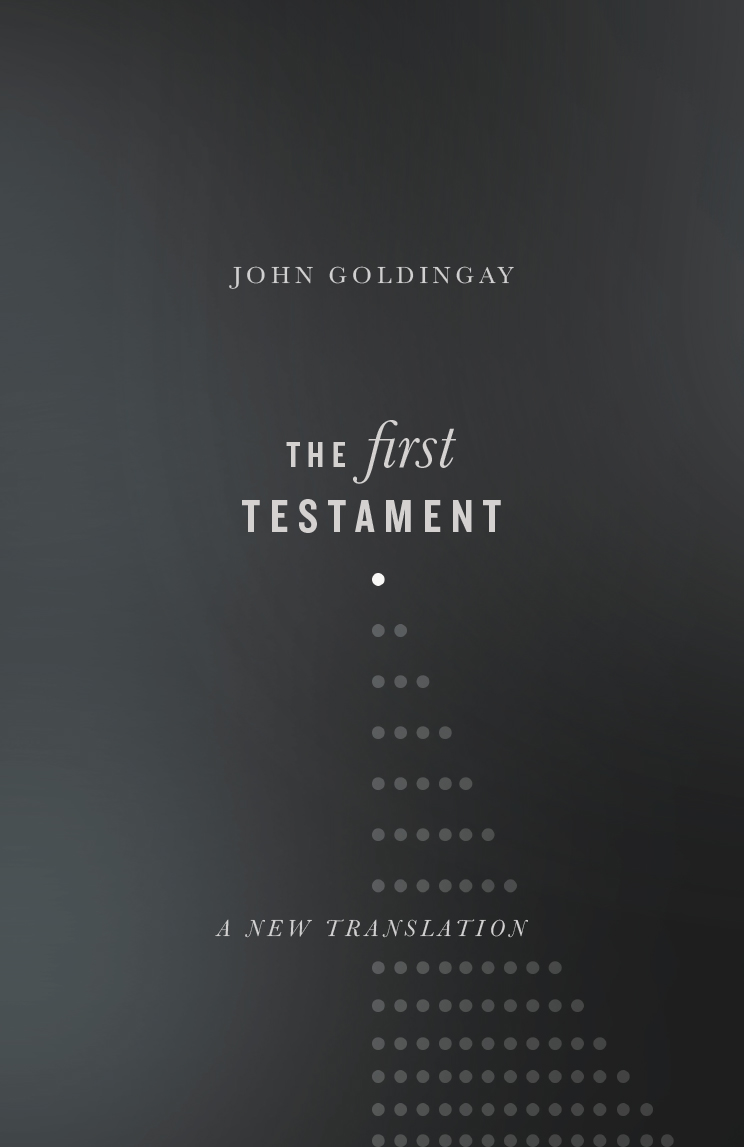
Book Review: The First Testament, A New Translation

The First Testament
One of the aspects of writing that I most love is playing with words! As a matter of fact, I'm one of those nerdy people who relishes pouring over a thesaurus to find just the right word. In some respects, translation work can be something like that as well since the translator must find precisely the right word(s) to capture what is communicated in the original language, and this isn't always an exact science as languages don't always have perfect word-to-word correspondence. This is why it is so valuable to consult multiple translations when studying a particular passage of Scripture. To that end, John Goldingay has sought to serve the Church with a fresh translation of the Old (First) Testament.


STRENGTHS:

- Fairly easy-to-read (minus the transliteration of names and places which might be hard on the average lay person)

- Consistent translation of Hebrew words across the entire work due to single translator completing the entire project

- Incorporates word plays directly in the text and headings where they can be better noted and appreciated rather than relegating them to footnotes. (Ex. "Babel becomes Babble-on" is the title for Genesis 10:21-32)

- Fresh word choices help readers to slow down over familiar passages, taking them in afresh. For example,

  • "Yahweh" replaces "LORD"
  • "Yahweh's instruction" replaces "law"
  • "awe" replaces "fear" 
  • "sacred" replaces "holiness"
  • "deliverance" replaces "salvation"
  • "wrongdoing" replaces "sin"
  • "rebellion" replaces "transgression" 
  • "waywardness" replaces "iniquity"
"I acknowledged my wrongdoing to you;I didn't cover my waywardness.I said, 'I shall confess my rebellions to Yahweh',and you yourself carried the waywardness of my wrongdoing."Psalm 32:5

I'm no Hebrew expert, so I'm a bit neutral on replacing sin and iniquity. However, I do tend to think "rebellion" is more clear in modern-day culture than "transgression". My understanding is that there is something of a progression between these three terms with sin being a failure to hit the target, transgression being rebellion (ex. seeing the line and choosing to cross it), and iniquity being premeditated rebellion.

WEAKNESSES:

- Every word choice didn't seem to be an improvement. Word replacements in this translation were frequently less vivid and seemed to result in reduced clarity.

Most notably, "righteousness" was substituted with "faithfulness". Again, I don't know Hebrew, but my understanding is that there is a distinct Hebrew word to convey the idea of faithfulness, and it isn't the same word that is used to convey righteousness. While faith is an aspect of righteousness, faithfulness and righteousness are not equal concepts. (Paul Helm has a helpful blog post dedicated to this if you want to read more about it.)


Another example is that "authority" is utilized in place of judgment. Genesis 18:25b is far less precise and makes little sense when translated:

"Isn't the one who exercises authority over the entire earth to exercise authority?"

Clear as mud, right?

"Steadfast love" is replaced by "commitment". Again, while steadfast love involves commitment, it is far more than mere commitment.

- In some places, gender neutrality obscures the original Hebrew. Vern Poythress has a helpful article on this subject with regard to the TNIV. While Goldingay doesn't make every mistake made by the TNIV, he does make the same mistakes in Psalm 1 and 8, Genesis 1:27, and others which seems worth noting.

- Book introductions seemed to reflect a weak doctrine of the Word in favor of modern historical criticism.

This is perhaps my greatest criticism. For example, the introductions to Genesis and Exodus question the historical accuracy of the original authors saying that the accounts are more like a Hollywood movie based on fact. The introduction to Deuteronomy suggests a late authorship and/or compilation during the reign of Josiah contrary to Christ's affirmation of Mosaic authorship. Goldingay writes that Jonah is merely an allegory.

- As mentioned above, transliteration of proper nouns made this translation a bit clunky, at times and seems as though it would present more of a hurdle for a lay audience with no language background.


FINAL THOUGHTS:

Overall, this translation could be helpful for a seasoned reader of Scripture who wants something fresh to stimulate thought. However, I'm not sure it warrants the price tag.

*Many thanks to IVP for sending me a complimentary copy of this title! These are my very own, honest thoughts. ;)

Monday, May 7, 2018

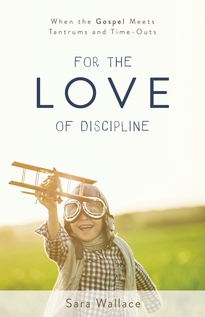
For the Love of Discipline - Book Review

"For the moment all discipline seems painful rather than pleasant, but later it yields the peaceful fruit of righteousness to those who have been trained by it" (Hebrews 12:11, ESV).

For the Love of DisciplineDiscipline. Does that word carry a positive or negative connotation for you? What is "discipline"? What does it look like in the context of parenting? Should one do it? If so, when and why?  Does discipline differ from punishment? If so, how? Perhaps few subjects carry the weight of this one, with a diversity of strong opinions running the gamut, and so, we tend to avoid talking about it, and yet, discipline is hard work and a thankless job with eternal consequences, so we could really use support and encouragement along the way. To this end, Sara Wallace joins the sea of voices with For the Love of Discipline.

Building upon the foundation laid by folks like Tedd Tripp (Shepherding a Child's Heart) and Elyse Fitzpatrick (Give Them Grace, previously reviewed here), Sara supplies practical applications for those who already have a solid foundation in applying the Gospel to a child's heart. She successfully combines sound theology and amusing word pictures for a book that is fun, gracious, and edifying. Again and again, Sara points parents to Christ's finished work and demonstrates the difference that the Gospel makes in one's parenting.

At approximately four and a half pages per chapter, For the Love of Discipline is a quick read that addresses some common parenting challenges. Among the questions addressed in this book are:


  • How do we use rewards in a way that addresses the child's heart, points him/her to the Gospel, and glorifies God as opposed to merely modifying behavior temporarily?
  • What is the difference between a reward and a bribe?
  • How do we celebrate obedience rather than simply doing "damage control" for disobedience?
  • How do we find the balance between too much or too little discipline?
  • How do we set realistic expectations with our kids?
  • Are there times when we should "let things slide" and just "let kids be kids"?
  • How should we respond when our child tells us, "No!"?
  • How do we handle tantrums in toddlers and bigger kids?

Additionally, Sara shares practical tools that are serving her in her parenting journey including:

  • the benefits of utilizing structure and routine;
  • how using stories and "word bundles" can be beneficial alternatives to lecturing;
  • how to navigate sibling relationships, teaching children how to be peacemakers rather than peace breakers, as well as, how to show love and serve one another.

Furthermore, Sara raises some thought-provoking questions for her readers throughout the book such as: "Who or what are you teaching your kids to fear?" and "Are you offering your kids comfort that will persist throughout their entire lives?" At the close of each chapter, Sara includes questions and/or activities for reflection to help her readers apply the chapter's content.

Like many books, I found some chapters more helpful than others, and there were places where I didn't agree or would do things differently, but all-in-all, Sara Wallace has written a wonderfully encouraging book with much practical advice that will serve parents as they seek to faithfully run the race set before them, planting seeds for the Gospel all along the way. While I wouldn't consider this a replacement for some more foundational parenting works (like those mentioned above), I'm grateful that Sara has added this Gospel-centered contribution that is personal, winsome, and warm! Sara's heart for God's glory shines through on every page, and I am happy to commend this book to others for their edification.

*Many thanks to P&R Publishing for providing me with an advanced reader copy of For the Love of Discipline, offering me the opportunity to share my honest opinion regarding the contents!

Saturday, February 10, 2018

Graciousness: Tempering Truth With Love (Book Review)


"Peacemakers are people who breathe grace to others in the midst of conflict. Since we cannot breathe out what we have not breathed in, this process hinges on our moment-to-moment relationship with God" (Ken Sande as quoted by John Crotts, pg. 68).


Zealous for truth. That's me. Expressing the truth with more zeal than love. Sadly, that is also me at times. This side of heaven, I imagine I will always be able to benefit from some practical methods for cultivating graciousness. That's why I was excited to read John Crotts' latest book, Graciousness: Tempering Truth with Love.

Crotts spends the first half of his book laying a biblical foundation by examining the Bible's commands for Christians to be gracious, setting forth the Lord Jesus and the apostle Paul as positive examples and the church at Ephesus as a cautionary tale of sorts. The second half of the book aims at highlighting practical ways to cultivate graciousness by considering our hearts, the value of others, and our actions, as well as specific suggestions for cultivating graciousness in community.

Graciousness is well written and offers wise counsel. For example, Crotts advises his readers not to merely read books about graciousness but to read biographies about those who exemplify it and adds this beautiful explanation:

"Theoretical kindness provides instruction, but lived kindness adds authenticity and tangibility to principles" (pg. 127).

To that end, Crotts makes excellent reading recommendations. The influence of outstanding works such as Ken Sande's Peacemaker, Paul Tripp's War of Words, David Powlison's Speaking the Truth in Love, and Donald Whitney's Spiritual Disciplines for the Christian Life (among other titles) can be clearly seen within the pages of Graciousness.

All-in-all, if you are looking for a book that will remind you afresh of the truths of God's Word and the Gospel which will help you to infuse your conversations with graciousness, you will find this to be a worthwhile companion. It is a short, easy read in which Crotts handles Scripture faithfully and is a good, general primer on the subject. Crotts writes: "Raw conviction without gospel hope produces despair" (pg. 130). Readers are likely to find both within the pages of Graciousness.

*Many thanks to Cross Focused Reviews and Reformation Heritage Books for sending me a complimentary copy of Graciousness in exchange for my honest opinion!

Here are some additional excellent books that have helped me cultivate graciousness in specific areas:


  • General - Practicing Affirmation by Sam Crabtree (This book does a really great job of practically demonstrating ways that we can affirm others when we are particularly tempted to be critical, especially when it comes to unbelievers with whom we have very little in common and even often find ourselves in disagreement. It has been a number of years since I have read this book, but I can still helpfully recall examples from this book. The illustration that I probably mentally re-visit most frequently is one in which he strikes up a positive conversation with a pro-choice protester while on a pro-life march. It's quite the conversation and wonderfully instructive! For more of my thoughts on this book, you can read my review.)
  • Marriage - When Sinners Say, "I Do" by Dave Harvey
  • Parenting - Everyday Talk by Jay Younts